
 User:
User:


Kyon
Storyboard

Upon leaving Price Waterhouse, I founded the company Kyon, from where I continued for several years advising companies using the same scientific methodology developed in my previous stage. The work focused mainly on the optimization of processes and the implementation of quality management systems that would allow achieving ISO 9000 certification.
Certification was not seen as an end in itself, but as a consequence of a correctly designed and controlled operation. In addition to contributing to maintaining the improvements achieved, it provided our clients' clients with objective evidence of the quality of their processes, products and services.
ID:('ky', 1783)
From the market to the company: understanding the dynamics of the business
Storyboard
The analysis of a company began long before studying its internal processes. The first step was to understand the market in which it operated, identifying who its suppliers were, who its customers were, and how goods and services flowed between the different economic actors. To do this, models inspired by Leontief's methodology were used, which allowed the purchase and sale relationships between different sectors and organizations to be represented, placing the company within a much broader economic network.
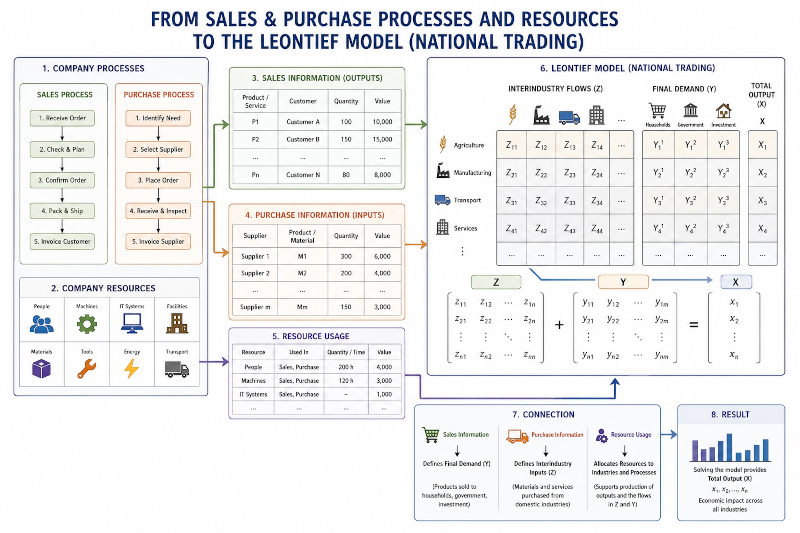
This approach made it possible to determine what products and services the company acquired, who it obtained them from, what goods it produced and which clients or markets it directed them towards. By representing these relationships as an integrated system, it was possible to understand how changes in a supplier, a customer or an economic sector ended up propagating to the entire company operation.
Once the economic environment was understood, the analysis extended to the interior of the organization, relating the inputs and outputs of the market model with the productive, logistical, commercial and administrative processes of the company. In this way, each process could be evaluated not only for its internal efficiency, but also for the role it played within the entire value chain.
This type of analysis made it possible to anticipate how the evolution of the market would force the organization to gradually modify. Changes in demand, suppliers, input costs, competition or customer preferences could translate into the need to redesign processes, reallocate resources or develop new capabilities. Consequently, the company stopped being seen as a static structure and began to be understood as a system in permanent adaptation to its economic environment, providing a solid basis to strategically plan its future evolution.
ID:('gp', 672)
The voice of the customer: understanding how the market perceives the company
Storyboard
Once the market structure and the internal functioning of the organization were understood, the next step was to understand how customers perceived the products, services, and purchasing experience. The objective was not only to measure the level of satisfaction, but to discover the factors that really influenced purchasing decisions and that, therefore, should guide the future evolution of the company.
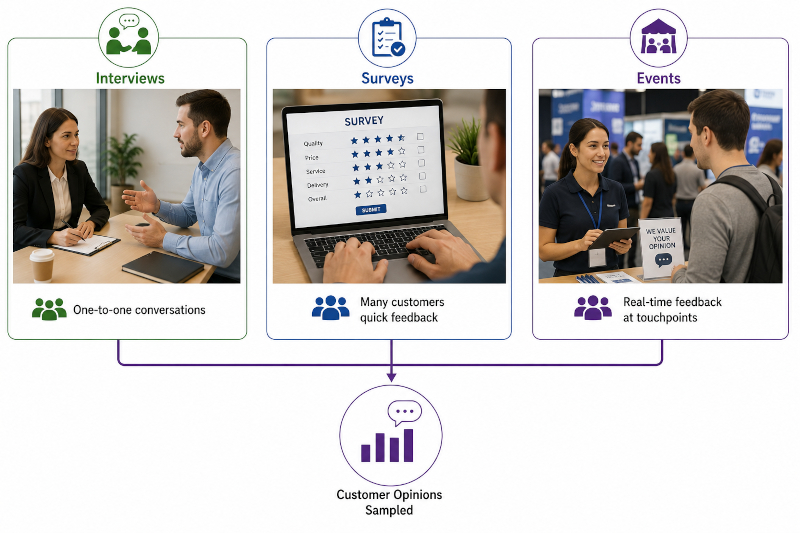
For this, various information collection techniques were used. In-depth interviews were carried out with customers, structured surveys to obtain statistically representative information and direct observations at points of sale, where it was possible to analyze the real behavior of consumers during the purchasing process. These sources of information made it possible to complement the internal vision of the company with the external perception of the market.
The analysis sought to identify how the attributes of the products, the quality of the service, the attention of the staff, the availability of the items, the waiting times, the presentation of the points of sale and, in general, all those aspects that influenced the customer experience were valued. In many cases, the reasons why a customer preferred the competition or abandoned a purchase were also studied, providing information that was difficult to obtain solely through internal indicators.
The integration of this information with process models and market analysis allowed the company's operation to be aligned with the real expectations of its customers. In this way, redesign decisions were no longer based exclusively on internal efficiency criteria and began to incorporate, as a central element, the perception and needs of the market, ensuring that the improvements implemented simultaneously generated greater customer satisfaction and better results for the organization.
ID:('gp', 678)
Integrating customer experience with company operations
Storyboard
The real challenge of an organization is not only to design good products or provide good service, but to ensure that the entire company operation is capable of consistently and profitably delivering the experience that the customer expects to receive. Therefore, once the market perception was understood, the next step was to link that experience with the internal processes that made it possible.
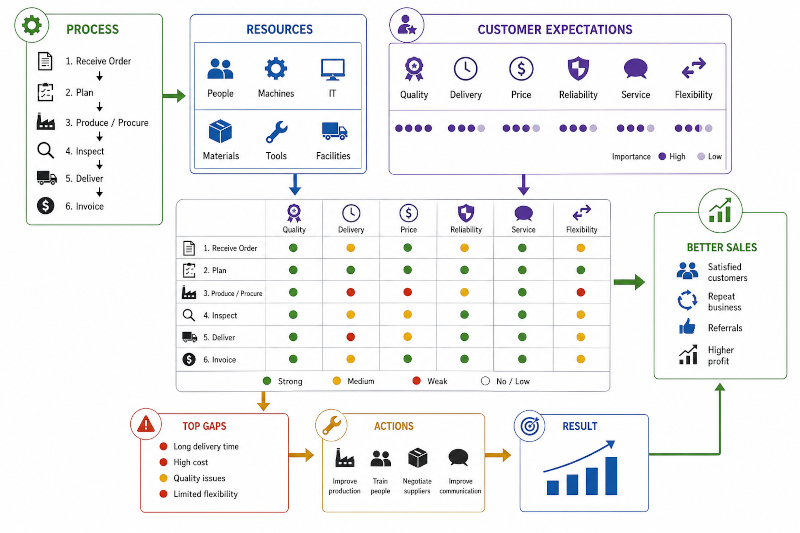
The analysis began by relating each of the elements that make up the customer experiencethe characteristics of the product or service, the sales process, commercial attention and subsequent supportwith the processes responsible for producing them. From this relationship it was possible to identify which activities added value and which limited the quality perceived by the client.
Subsequently, each process was decomposed into the resources that supported it: the people who executed it, the equipment used, the materials consumed, the facilities where it was developed, the work tools and the information systems that supported the operation. In this way, complete traceability was obtained, from the customer's perception to the specific resources that influenced it.
This integration allowed us to understand that an improvement in the customer experience rarely depended on a single change. In many cases it was necessary to redesign processes, reassign responsibilities, incorporate new technologies, modify procedures, train personnel or adapt the available infrastructure. The goal was not to maximize customer satisfaction at any cost, but to find a solution that balanced the market's perceived value with the company's operational efficiency.
The final result was an integrated model in which the market, products and services, the sales process, the operation and its resources were connected within the same logical structure. On this basis it was possible to determine what changes should be made to adapt the company to new market needs, ensuring that these transformations were technically and economically viable, simultaneously increasing customer satisfaction and business profitability.
ID:('gp', 677)
Survey of the current value proposition
Storyboard
Before proposing any improvement, it was essential to understand precisely what the value proposition that the company was offering to the market at that time. To achieve this, a systematic survey of the existing products and services was carried out, as well as the entire sales process, from the first contact with the customer to the final delivery and subsequent service. The purpose was to objectively document the current situation before defining the desired future state.
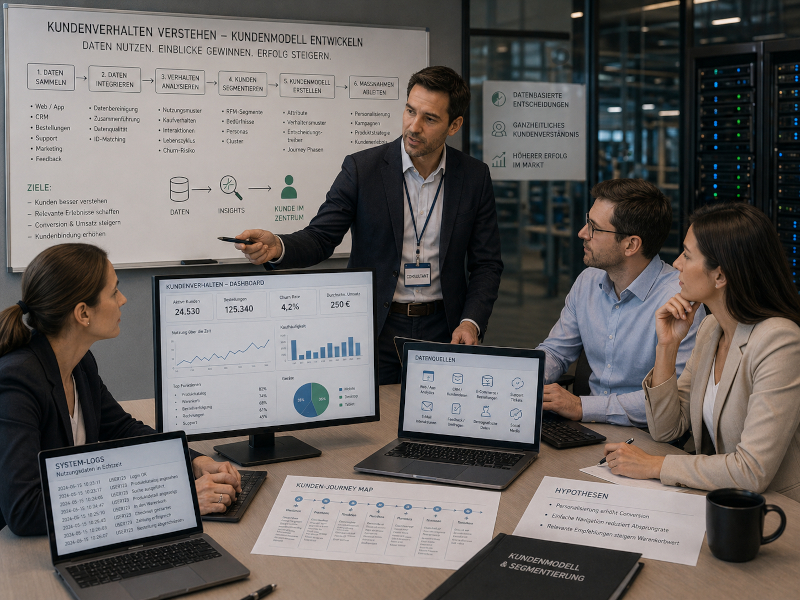
The study analyzed the characteristics of the products and services offered, the customer segments to which they were directed, the way in which they were presented, marketed and delivered, as well as the sales channels, commercial policies and service mechanisms used by the company. At the same time, information was collected on the strengths and weaknesses perceived by both clients and the organization's own staff.
This information was integrated with the analysis of the market and the internal operation to determine the differences between the current offer and the real needs of customers. The objective was not only to identify problems, but to discover opportunities to increase the value delivered to the market, improve competitiveness and strengthen the company's positioning.
The result of this survey formed the basis for defining which aspects of the products, services and sales process should be modified. On that basis, change proposals could be designed that were aligned with market expectations and that, at the same time, could be efficiently supported by the organization's processes and resources, ensuring that the improvements were technically, operationally and economically viable.
ID:('gp', 679)
Redesigning the customer value proposition
Storyboard
Once the relationship between customer experience and company operations was understood, the next step was to critically review the existing offering. The products and services offered, along with the sales process that accompanied them, were analyzed to determine to what extent they responded to the current needs of the market and what changes would allow increasing the value perceived by the customer without compromising the profitability of the business.
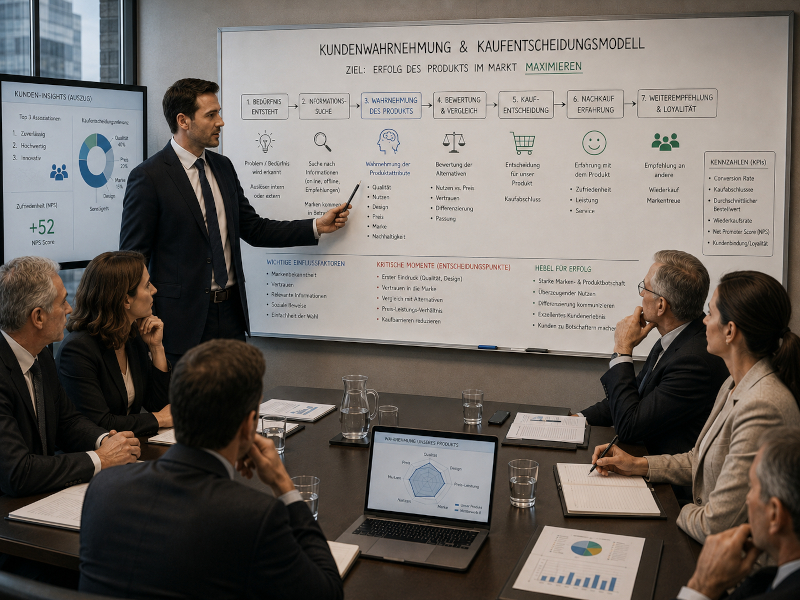
The analysis considered both the characteristics of the product or service and the way in which it was presented, marketed and delivered to the customer. Aspects such as the value proposition, differentiation compared to the competition, the service process, response times, availability, quality of service and all those factors that influenced the purchasing experience were evaluated. The objective was to identify the strengths that needed to be enhanced and the weaknesses that limited the company's competitiveness.
An essential characteristic of this stage was that the redesign was not carried out exclusively by the consulting team or by management. In each area, those responsible for the processes and the people who would later have to operate under the new scheme actively participated. Their experience allowed them to validate the feasibility of the proposals, identify restrictions that were not evident from the analysis and enrich the solutions with the knowledge acquired during years of operation. At the same time, this participation generated a strong sense of belonging, making the changes perceived as a collective construction and not as an external imposition.
Each proposed modification was analyzed together with the processes and resources necessary to make it a reality. In this way, it was verified that the improvements not only increased customer satisfaction, but were also operationally viable and economically sustainable. In many cases this involved redesigning processes, reallocating resources, incorporating new technologies or modifying the organization of work to support the new value proposition.
The result was a coordinated evolution of the company, where products and services, the sales process and internal operations were developed in an integrated manner. The active participation of those who would later execute the new processes facilitated acceptance of the changes, reduced natural resistance to the transformation and significantly increased the probability of success during implementation. In this way, improvements in the customer experience ceased to be isolated initiatives and became a project shared by the entire organization, aimed at generating greater value for the market and, at the same time, increasing the efficiency and profitability of the business.
ID:('gp', 680)
Modeling the operation that supports the business
Storyboard
In order to transform a company, it was essential to precisely understand how it really operated. The objective of the operational survey was to systematically document the processes that made the design, production and delivery of products and services possible, as well as those that supported the commercial process and customer service. Only by understanding this structure was it possible to evaluate the impact that any change would have on the company's value proposition.
The analysis began by identifying each of the processes that made up the operation and breaking them down into their elementary activities. For each activity, the positions responsible for executing it, the functions performed by the people involved, the materials consumed, the information used to make decisions and the information generated as a result of the work were documented. Likewise, the tools, equipment, facilities and computer systems that supported the execution of each task were recorded.
This level of detail allowed us to build a complete model of the operation, where each product, service or commercial activity could be directly related to the processes that supported it and the resources necessary to execute it. In this way it was possible to know exactly which part of the organization was responsible for generating value for the customer and how the different areas interacted to achieve it.
The result was an integrated representation of the company in which products, services, sales, processes and resources were linked within the same logical structure. This model formed the basis for evaluating the effect of future modifications, allowing us to determine which processes should be redesigned, which resources should be reinforced or reallocated, and which technologies should be incorporated so that the company could evolve efficiently, profitably, and in line with market expectations.
ID:('gp', 673)
Redesigning the operation to support the new strategy
Storyboard
Once the required changes in products, services and the sales process were defined, the next step was to determine how the operation should be transformed to make them a reality. The objective was not to modify processes in isolation, but to redesign the entire operational structure in a manner consistent with the new value proposition, ensuring that improvements could be implemented efficiently and profitably.
The analysis began by reviewing the activities that made up each process to determine which ones should be eliminated, simplified, automated, or incorporated. The profiles of the positions involved were then evaluated, identifying the competencies necessary to perform the new functions and defining the organizational and training changes required to support the new way of operating.
At the same time, the materials used by each process, the information that each activity needed to be executed and the data it generated for the rest of the organization were analyzed. This study allowed us to redesign information flows, eliminate unnecessary records, improve the traceability of operations and ensure that decisions were based on timely and reliable information.
Finally, the tools, equipment and computer systems that supported the execution of the processes were evaluated, determining which ones should be adapted, replaced or incorporated to support the new operation. The result was an integrated model of change, where activities, people, materials, information and technology evolved in a coordinated manner, allowing the company to implement its new strategy with the lowest possible cost and with a positive impact on both the customer experience and the profitability of the business.
ID:('gp', 674)
Aligning position profiles with the new way of operating
Storyboard
Process redesign can only be successfully implemented when people have the necessary skills to perform their new responsibilities. Therefore, a fundamental stage of the project was to review the profiles of each position and adapt them to the activities they had to execute within the new organization, ensuring that the people's capabilities were aligned with the company's operational objectives.
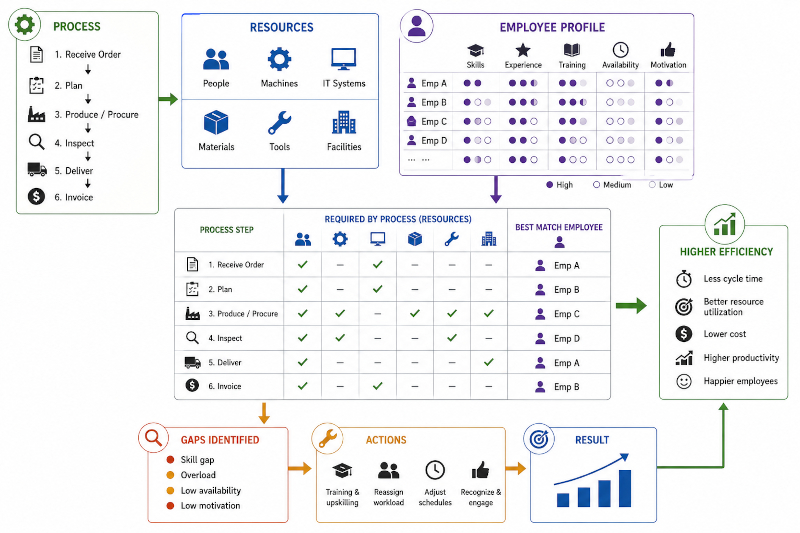
The analysis began by identifying the activities assigned to each position and the resources with which they had to interact during their work. For each position, the materials that had to be used, the information that had to be consulted and generated, the tools and equipment that had to be operated and the computer systems that supported their functions were determined. This description made it possible to understand precisely what knowledge and skills were really necessary to perform the role efficiently.
Based on this information, the profiles required for each function were defined, specifying the technical and personal skills, previous experience, level of training, specific knowledge and availability required to respond to the needs of the operation. When there were differences between the current profile and the target profile, different alternatives were evaluated, such as training programs, reassignment of functions, redesign of responsibilities or incorporation of new personnel.
The result was an organization in which people, processes and resources evolved in a coordinated manner. In this way, each position was defined not only by its position within the organization chart, but by the value it contributed to the operation and by its ability to efficiently execute the activities necessary to deliver the products and services that the market demanded.
ID:('gp', 675)
Adapting human capital to the new organization
Storyboard
The transformation of a company not only requires modifying processes and technologies; It also requires adapting the skills of the people who execute them. Therefore, an essential stage of the project was to redefine the profiles of the positions in accordance with the new responsibilities and determine how the organization could develop or incorporate the necessary capabilities to operate successfully under the new model.
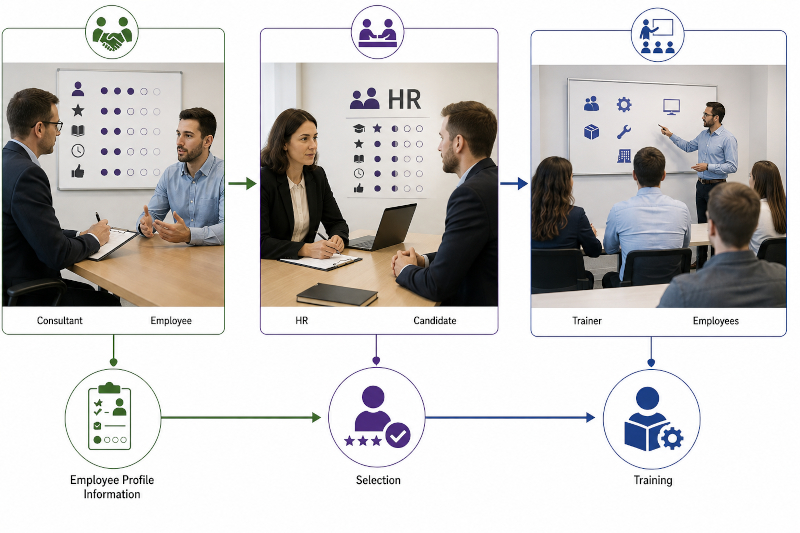
The first step was to update the profiles of each position, incorporating the new activities, responsibilities, tools, information systems and knowledge required by the redesigned processes. On this basis, the objective profile for each position was established, specifying the technical skills, personal competencies, experience, training and level of autonomy that would be necessary in the new organization.
These profiles became the reference for the selection and hiring processes of new personnel. The incorporation of new collaborators was no longer based solely on general experience or the availability of candidates and began to respond to the specific requirements defined for each function, ensuring greater compatibility between people's capabilities and the needs of the company.
At the same time, the competencies of existing personnel were evaluated to identify the differences between the current profile and the required profile. When these gaps could be closed through training, training programs were designed to develop the knowledge and skills necessary to perform the new functions. Only when the differences were incompatible with the new organizational model were alternatives considered, such as the reassignment of functions or the incorporation of new professionals.
In this way, people management became part of the company's transformation process. Position profiles, personnel selection and training programs were no longer independent activities and were integrated into the redesign of the operation, ensuring that the organization had the necessary competencies to sustain the implemented changes over time and respond effectively to new market demands.
ID:('gp', 676)
Implementing change: migrating the organization to the new operation
Storyboard
Once the new operating model was defined, the challenge was to put it into practice without affecting business continuity. Implementation required carefully planning the transition from the current way of operating to the new scheme, identifying what changes needed to be made, in what sequence and at what time they should be introduced to minimize the impact on production, sales and customer service.
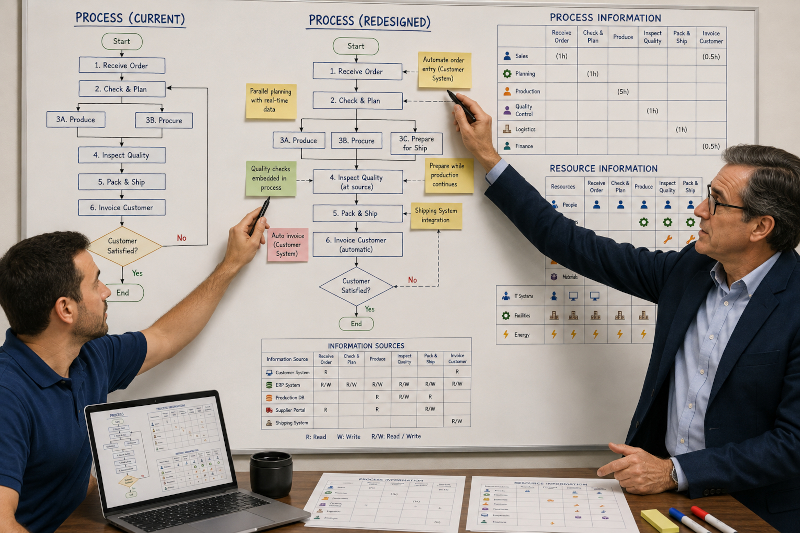
The migration was planned as an organizational change project, defining the dependencies between processes, the availability of resources and the risks associated with each modification. This allowed an implementation schedule to be established that ensured an orderly transition and minimized operational disruptions.
At the same time, all the necessary documentation was developed to institutionalize the new way of working and ensure that it remained over time regardless of the people who executed it. Each process was documented following a uniform structure that facilitated its understanding, application and control.
For each process, the following elements were prepared, among others:
• Objectives of the process, clearly defining its purpose and expected results.
• Flow charts, describing the sequence of activities and the relationships between them.
• Work instructions, when an activity required detailed procedures or specific knowledge.
• Assignment of responsibilities, indicating the positions responsible for executing and controlling each activity.
• Information used and generated, identifying the documents, records and indicators that each activity requires or produces.
• Necessary resources, specifying the materials, equipment, tools and infrastructure essential to correctly execute each task.
This documentation formed the basis for staff training, operation supervision, internal audits and continuous improvement. Rather than describing how the company operated at a given time, it established the official way of operating, allowing the changes designed during the project to be transformed into a stable, repeatable and controllable practice over time.
ID:('gp', 681)
Simulation: validating and optimizing the organization design
Storyboard
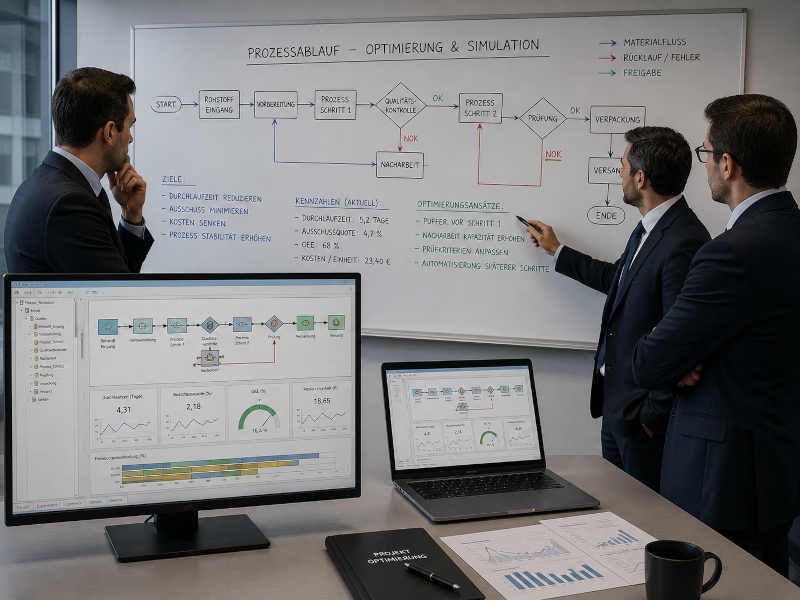
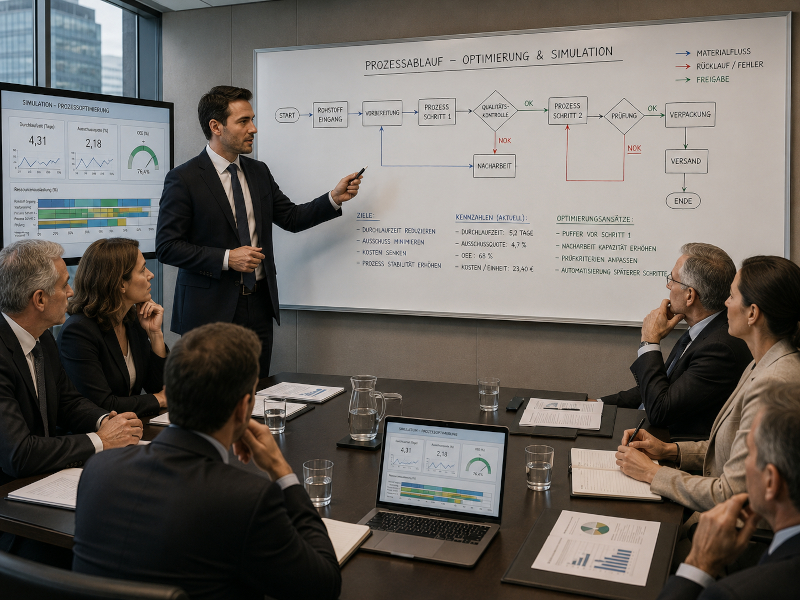
Once the new operating model was designed, the next step was to verify that it was coherent, realistic and capable of responding to the expected operating conditions. For this purpose, computer simulators were developed that reproduced the behavior of the organization, allowing the effect of different decisions to be evaluated before implementing them in the real company.
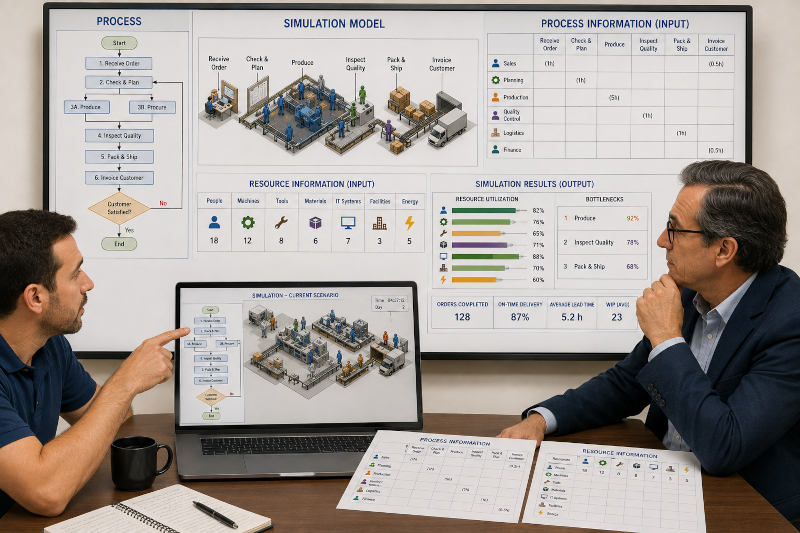
The simulation made it possible to verify that the designed processes were consistent with each other, that there were no bottlenecks, work overloads or insufficient resources, and that the capacities defined for each area were compatible with the expected demand. In this way, it was possible to detect design problems when it was still possible to correct them with minimal cost, avoiding the risks associated with a direct implementation on the operation.
Once the consistency of the model was validated, the simulator became a powerful optimization tool. By evaluating different scenarios, alternatives could be analyzed to determine the most efficient configuration of the organization. Among the parameters studied were the required staffing, the distribution of functions and job profiles, the capacity and location of storage areas, optimal inventory levels, the quantity and characteristics of the materials used, as well as the number, type and capacity of the equipment, tools and other resources necessary for the operation.
The simulation also made it possible to evaluate the impact of future changes, such as increases in demand, incorporation of new products, technological modifications or changes in the organizational structure. Thanks to this, the company could anticipate the consequences of different decisions and select those alternatives that offered the best balance between level of service, use of resources and profitability.
In this way, the redesign process was no longer based solely on experience or intuition and was now based on quantitative models capable of reproducing the organization's behavior. The simulation thus became the last validation step of the project and, at the same time, a permanent tool to support the planning and continuous improvement of the company.
ID:('gp', 682)
Verifying implementation: process audit
Storyboard
Once the migration to the new way of operating was complete, the next step was to verify that the organization was executing the processes as they had been designed and documented. To this end, process audits were carried out based on the documentation generated during the project, commonly known as Quality Manuals, whose objective was to verify that the real operation coincided with the specified operation.
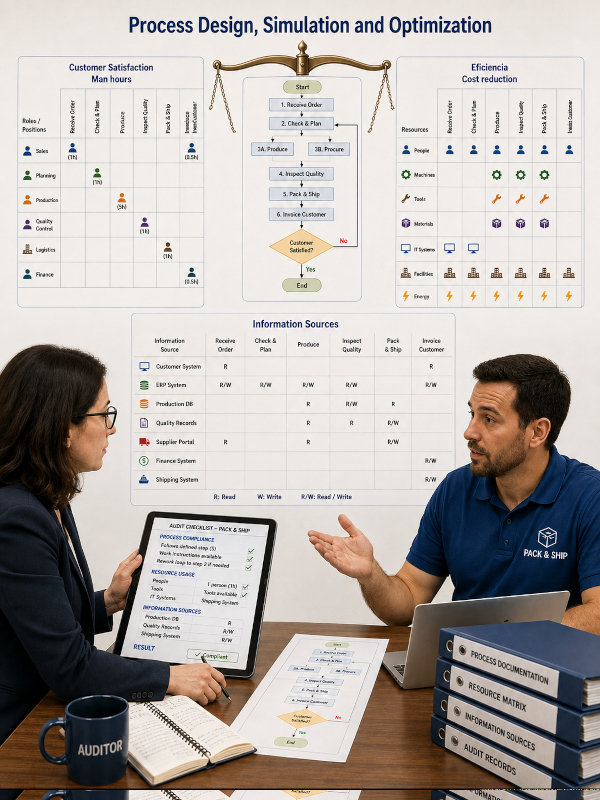
The audits were carried out directly in the field, observing the execution of the activities, interviewing the people responsible and reviewing the information generated during the operation. The purpose was not to evaluate the individual performance of the workers, but rather to determine whether the process was being executed in accordance with established procedures and whether the organization had correctly implemented the new operational model.
During the review, it was verified that each person had been incorporated into the new profile defined for their position, that they had the required training and that they had the necessary resources to carry out their work. Likewise, it was verified that the activities were executed in the planned sequence, using the materials, equipment, tools and information defined in the process documentation.
When deviations were detected, they were recorded as non-conformities, always accompanied by objective evidence that supported them. Said evidence could consist of documents, records, reports issued by the information systems, direct observations made during the audit or the precise identification of the procedure or instructions that was not being followed. In this way, observations stopped being opinions and became verifiable facts.
The result of the audit constituted the starting point for continuous improvement. The non-conformities detected allowed corrective and preventive actions to be defined, ensuring that the organization gradually consolidated the new way of operating and that the benefits obtained during the redesign of the processes were maintained over time through systematic and evidence-based management.
ID:('gp', 683)
Managing change: communication, participation and commitment
Storyboard
The success of a transformation project does not depend solely on good technical design. For new processes to become part of the organization's culture, it is essential that people understand why the changes are made, how they will be affected and what their contribution will be to the final result. Therefore, along with the technical implementation, a systematic communication and change management program was developed aimed at facilitating the transition to the new way of working.
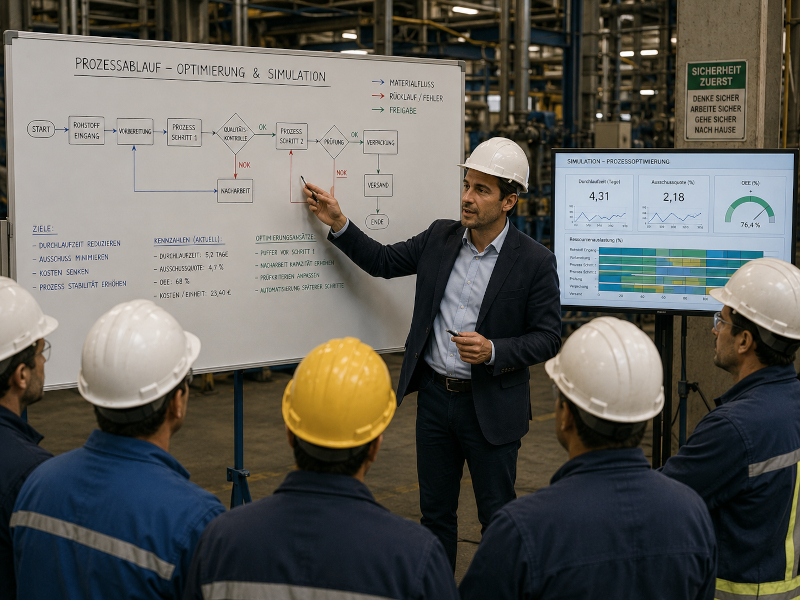
The dissemination of the changes began before their implementation, explaining the objectives pursued, the expected benefits and the way in which the company's processes would evolve. This communication was not carried out solely by management or the consulting team. A fundamental element consisted of actively involving the people who had participated in collecting information and designing improvements within each area of the organization. In this way, the changes began to be perceived as the result of joint work and not as decisions imposed from the outside.
The participation of these internal references facilitated the acceptance of the new practices, strengthened trust between the teams and allowed doubts and difficulties to be resolved using the knowledge of those who best knew the daily reality of each process. This approach contributed significantly to reducing the natural resistance that usually accompanies any organizational transformation.
At the same time, motivation and support programs for change were developed, recognizing that any modification in the way of working generates uncertainty and, in many cases, opposition. These programs sought to explain the reasons for the change, highlight the expected benefits for both the organization and the people, and create spaces for participation where employees could express concerns and contribute new ideas.
In this way, change management ceased to be a complementary activity and became part of the redesign project itself. The combination of permanent communication, active participation, training and motivation allowed the new way of operating to be gradually assumed by the organization, increasing the probability that the improvements would be consolidated and remain over time.
ID:('gp', 684)
Continuous improvement: keeping the organization in permanent evolution
Storyboard
The implementation of the new operating model did not mark the end of the project, but rather the beginning of a new stage aimed at ensuring that the organization continued to function in accordance with the defined processes and evolved along with the needs of the business. To this end, a permanent internal audit program was established, conceived as a management tool aimed at verifying the performance of the processes and promoting their continuous improvement.
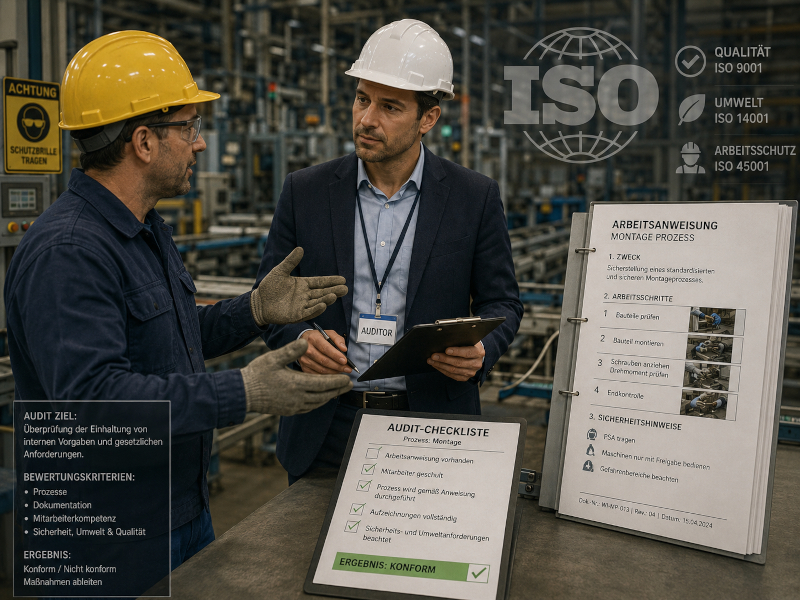
Audits were carried out periodically following a previously established plan that covered all the organization's processes. In each review, compliance with the documented procedures, the effectiveness of the implemented controls, the availability of the necessary resources and compliance with the objectives defined for each process were verified. At the same time, it was evaluated whether the changes introduced were still appropriate in the face of the new conditions of the market, technology and the organization itself.
The deviations detected during the audits were analyzed to identify their causes and define the corresponding corrective and preventive actions. Once implemented, these actions were verified in subsequent audits to ensure that the problems had been effectively resolved and would not be repeated.
In this way, the organization incorporated a permanent learning mechanism. Processes ceased to be static structures and became systems capable of continually adapting to new demands and opportunities. The internal audit thus went from being a simple control activity to becoming one of the main drivers of continuous improvement, ensuring that the company maintained the achieved efficiency over time and continued to optimize its operation in a systematic and sustainable manner.
ID:('gp', 685)
Palos Verdes, Costa de Corral, Región de los Rios, Chile