
 User:
User:


How we innovate
Storyboard

Innovations, for the most part, emerge as a way to amplify capabilities that we already possess or to create completely new capabilities that nature never granted us. To achieve this, we normally begin by studying how natural systems work, identifying the physical or biological principles that make them effective. However, the final technological solution is rarely about copying nature. On the contrary, it usually replaces it with much simpler mechanisms, easier to build and, at the same time, considerably more efficient.
Thanks to this process we have managed to overcome limitations that for thousands of years seemed insurmountable. Each innovation expands our capabilities, increases productivity, strengthens the economy and, ultimately, improves our quality of life.
This chapter analyzes two historical innovations that profoundly transformed humanity: the wheel and the airplane. Through them, it is shown how an innovation process develops, what the principles that drive it are and what the magnitude of the changes it produces can be. Finally, the case of artificial intelligence is studied, probably the most transcendental innovation of our time, whose pace of evolution and potential for transformation far exceed those observed in previous technological revolutions.
ID:('ky', 1773)
What is innovation?
Storyboard
Innovation is not a random process. It is a systematic search to enhance our capabilities and even create others that we do not naturally possess. At each step we develop tools that expand our skills, often taking them far beyond what we initially imagined.
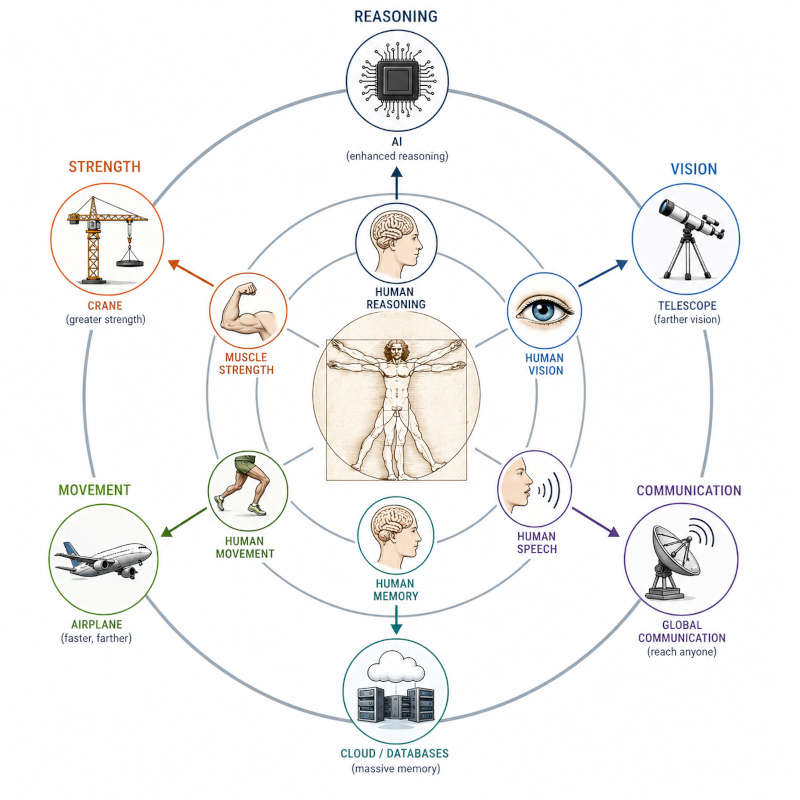
As an example of this, we will analyze three types of innovation. In all cases we observe natural systems present in our environment, we identify the fundamental principles that make them work and we complement them with new technologies to build simpler, more efficient and powerful solutions than existing ones, capable of vastly exceeding our natural capabilities.
We will begin by seeing how we manage to enhance our movement capacity, reaching higher speeds and allowing us to transport increasingly larger loads. Then we will extend our capabilities towards a domain that human beings do not naturally possess: flight. Finally, we will analyze how we have amplified our cognitive abilities, developing systems with a much greater memory and a reasoning speed that far exceeds what a human being can achieve alone.
ID:('gp', 523)
How to "walk" faster and carry more load
Storyboard
Since its origins, human beings have sought to move at greater speed and transport increasingly larger loads. The most obvious solution seemed to be to observe how other species walked to discover mechanisms that could be copied or adapted.
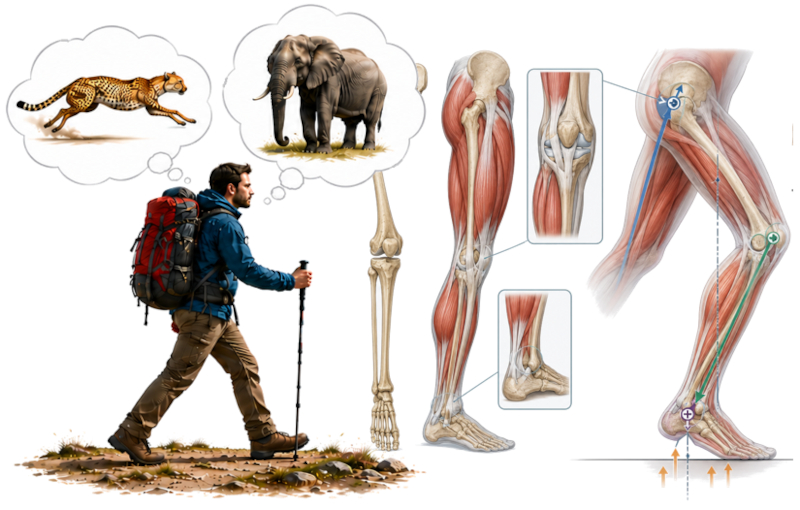
However, no matter how much he studied faster or stronger animals, he did not find a way to directly amplify the gait mechanism. They all shared the same fundamental limitation: movement depended on the successive support of legs or feet on the ground. Changing the number of legs or anatomy could improve the performance of a particular species, but it did not produce a qualitative leap in human capabilities.
ID:('gp', 524)
The revolutionary solution: the wheel
Storyboard
The solution appeared when the problem stopped being approached from biology and began to be analyzed from physics. Instead of trying to perfect walking, it was necessary to identify a completely different principle to reduce resistance to movement and allow efficient transportation of large loads. This change in perspective gave rise to technologies such as the wheel, which do not amplify human walking, but rather replace it with a much more efficient physical mechanism.
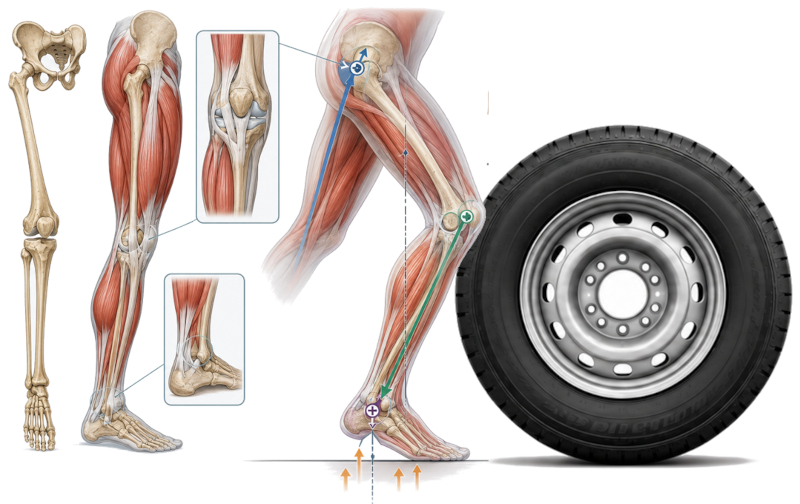
This example shows a fundamental characteristic of innovation: when a natural capacity cannot be directly amplified, the breakthrough comes from discovering a new physical principle capable of overcoming the limitations of the original mechanism. In this way, nature inspires the search, but the final solution may be radically different from any existing biological system.
ID:('gp', 525)
1000 years of evolution
Storyboard
The development of this transportation system has taken more than a thousand years. However, during the last century a second fundamental revolution occurred: the replacement of animal power by motors, initially powered by fossil fuels and, increasingly, by electric propulsion systems.
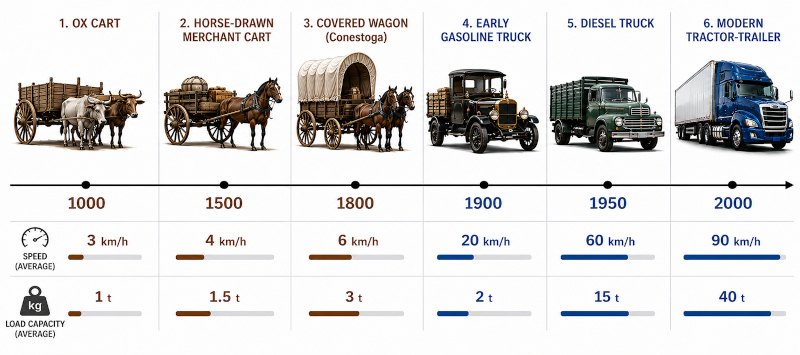
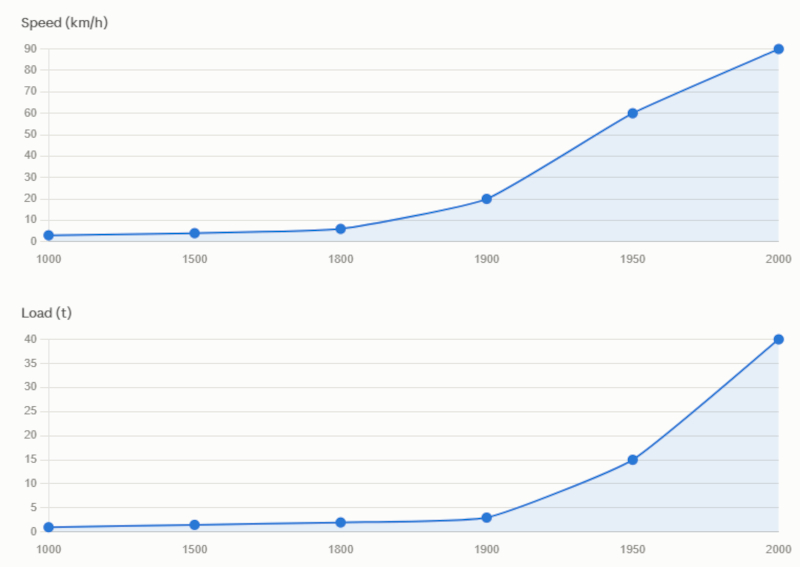
The two characteristics that define this means of transportation are its speed and its load capacity. Speed has increased steadily, although today it faces limitations imposed mainly by aerodynamic drag. For its part, load capacity is conditioned not only by the power of the vehicle, but also by the restrictions of the available infrastructure, such as roads, bridges and tunnels, which establish practical limits on the size and weight that can be transported.
Together, these innovations have transformed a limited human capacitywalking and carrying small weightsinto a system capable of moving hundreds of tons at speeds far greater than any living organism can reach on its own. This illustrates how technology amplifies our natural capabilities far beyond their biological limits.
ID:('gp', 526)
Future development of land transport
Storyboard
If the evolution curves of speed and load capacity are analyzed over time, it is observed that both have increased steadily. However, the speed is beginning to show signs of approaching a practical limit, determined mainly by aerodynamic drag, safety and energy consumption. In contrast, cargo capacity continues to grow, suggesting that there is still significant room to expand it further.
Restrictions imposed by road infrastructure, such as the strength of bridges or the maximum allowable load on the pavement, can be mitigated by distributing the weight over a greater number of wheels and axles. This strategy is already used in some countries, such as Australia, where road trains made up of several trailers linked to the same tractor vehicle circulate. This example shows that innovation is not always about increasing the power of a system, but also about finding new ways to distribute physical limitations to continue expanding our capabilities.
ID:('gp', 527)
How to "fly" achieving even more speed, range and capacity
Storyboard
At some point, human beings understood that, if they wanted to further expand their ability to travel, they had to be able to fly. To do this, he began by studying the flight of birds, observing how they beat their wings to "swim" in the air: during the backward movement they generate thrust, then they retract them to reduce aerodynamic resistance, reposition them and repeat the cycle continuously.
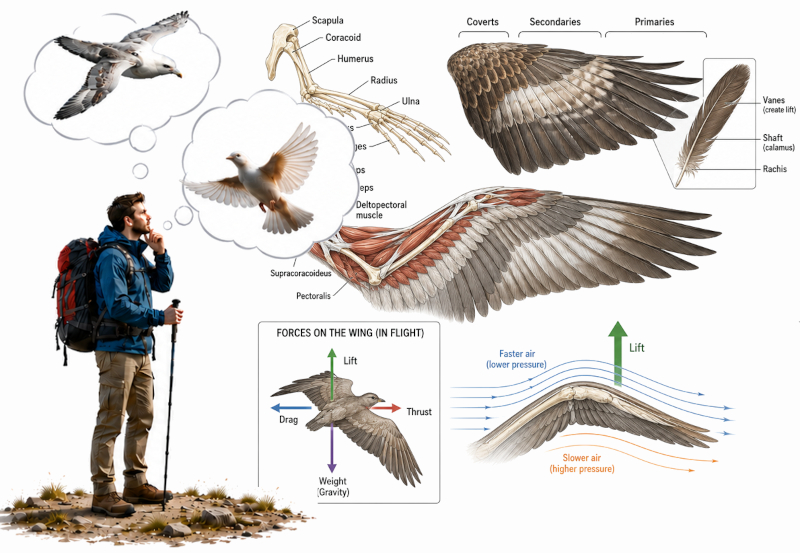
However, it soon became clear that reproducing this complex mechanism was extremely difficult from a technological point of view. Instead of copying the entire movement of the bird, it was necessary to identify which part of the process contained the really important physical principle. That principle was lift, generated by the curved profile of the wing as it moved through the air.
ID:('gp', 528)
Inventing the wing and the propeller/turbine
Storyboard
From this observation a much simpler and more efficient solution emerged. Rather than attempting to reproduce the complex flapping of wings, early development focused on the physical phenomenon responsible for keeping the bird in the air: lift. It was discovered that a wing profile with an adequate curvature generates a pressure difference when moving through the air, producing an upward force capable of compensating for the weight of the system.
This discovery allowed the first fixed wings to be built. Initially they were used in gliders, which demonstrated that it was possible to stay in flight and travel long distances without needing to flap the wings, taking advantage only of the initial speed and air currents. The problem of flight was then divided into two independent parts: on the one hand, generating lift through the wings and, on the other, producing the thrust necessary to maintain speed.
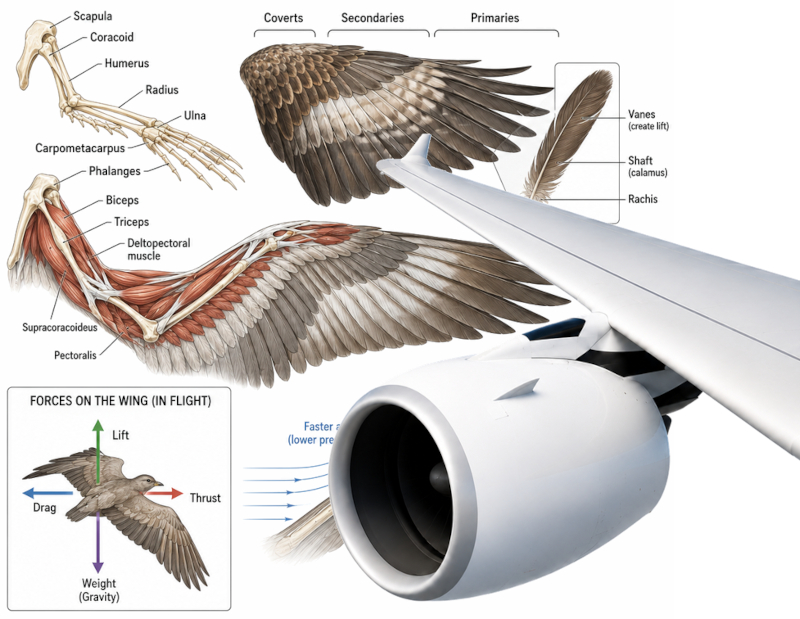
The next innovation was to apply the same physical principle of lift in a completely different way. If an airfoil is rotated rapidly around an axis, the lift force stops pointing upward and begins to generate thrust approximately parallel to the axis of rotation. This is how the propeller was born, which can be interpreted as a rotating wing capable of transforming engine power into propulsion force.
Over time, the same concept evolved into increasingly efficient systems. Multiple rotating airfoils, organized in several stages within a duct, gave rise to the compressors and turbines of modern aeronautical engines. These technologies allow enormous masses of air to be accelerated and generate thrust levels much higher than those achievable with a conventional propeller, making it possible to fly large aircraft at speeds much higher than those of any bird.
This development constitutes an excellent example of innovation based on physical principles. Human beings did not learn to fly by copying the movement of birds; identified the mechanism responsible for lift, separated the lift and propulsion functions and optimized them separately. The result was a system that was much simpler to build and capable of vastly exceeding the performance of the biological solution that initially inspired it.
This example illustrates a fundamental characteristic of innovation: the goal is not to copy nature, but to discover the physical principles that really matter and build completely different solutions that take advantage of them in a more efficient way.
ID:('gp', 529)
100 years of evolution
Storyboard
The evolution of the airplane was considerably faster than that of land vehicles. One of the main reasons is that its development coincided with a time when physics, aerodynamics, materials science and engineering had already reached a level of maturity sufficient to guide the innovation process. Instead of relying primarily on trial and error, as was the case during much of the evolution of wheeled vehicles, aircraft design was increasingly able to rely on scientific models capable of predicting the behavior of new solutions before they were built.
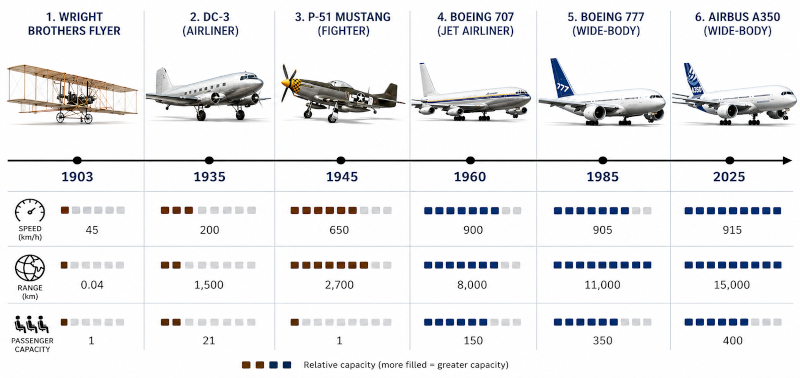
The evolution of speed shows two clearly differentiated stages. The first corresponds to the consolidation of aircraft powered by piston engines and propellers, which allowed the performance of the first aircraft to be progressively increased. The second great revolution occurred with the introduction of jet engines, whose operating principle made it possible to practically double the flight speed and approach the transonic and supersonic regime.
The carrying capacity followed a different evolution. During the first decades the main objective was to increase the speed and reliability of flight. Subsequently, once propulsion technologies and aeronautical construction techniques were mastered, it was possible to design increasingly larger and stronger fuselages, steadily increasing the number of passengers and cargo transported.
This example shows how technological innovation evolves when there is a deep understanding of the physical principles involved. Science not only made it possible to build better airplanes, but also transformed the innovation process itself, gradually replacing trial and error with rational development based on predictive models. This change largely explains why the evolution of aviation was much faster than that of technologies developed before the consolidation of the scientific method.
ID:('gp', 530)
Design Evolution
Storyboard
If the evolution of flight speed is observed over time, it can be seen that growth begins to show a trend towards saturation. The main reason is that aerodynamic drag increases very significantly when approaching Mach 0.7, where Mach corresponds to the ratio between the speed of the aircraft and the speed of sound. From this regime, important compressibility effects appear that rapidly increase drag and make a disproportionate increase in power necessary to achieve small additional increases in speed.
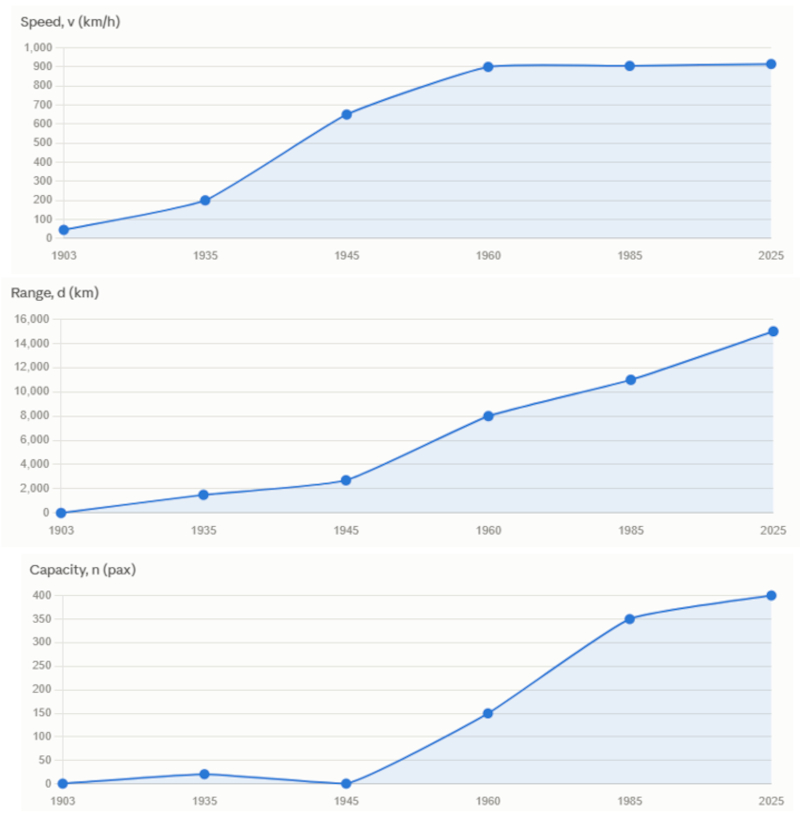
Aerodynamic limitations also affect the size of aircraft and, therefore, the number of passengers they can carry. However, the evolution of carrying capacity has been largely influenced by economic factors. Over time, airlines discovered that the decline in passengers on certain routes could be offset by using available freight capacity. As a consequence, air cargo increased steadily, even in periods when passenger transport growth was more moderate.
The sharp increase in drag around the speed of sound explains why modern commercial aviation typically operates below Mach 0.85. In this region a good compromise is obtained between travel time, fuel consumption and operational costs. Overcoming this barrier requires much more powerful motors and considerably higher energy consumption. For this reason, supersonic flight only becomes attractive again when speeds above Mach 2 are reached, where the aerodynamic regime stabilizes and the increase in drag stops growing so rapidly. At that point, the reduction in travel time can again begin to offset the high energy cost associated with these speeds.
ID:('gp', 531)
How to "think" better and faster
Storyboard
One of the great challenges of our era is to develop tools that amplify our cognitive abilities, allowing us to think better, process more information and reach conclusions more quickly. As in previous innovations, the objective is not to replace the human being, but to overcome the limitations of our natural capabilities. Just as the wheel amplified our ability to travel and the airplane allowed us to conquer an environment that was naturally forbidden to us, today we seek to build systems capable of enhancing our intelligence.
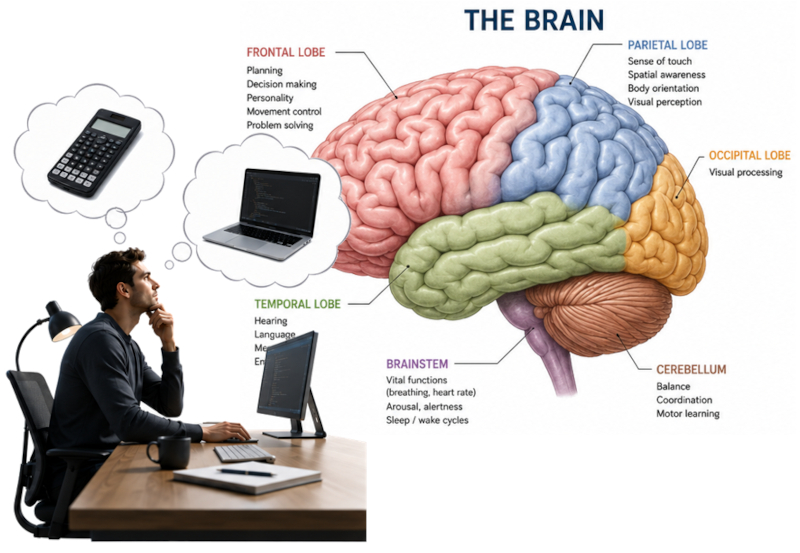
As in the previous cases, the first step was to study the natural system that we wanted to improve: our own brain. Understanding how we perceive the world, store information and reason allowed us to identify some of the fundamental mechanisms of thought. As explained in the section dedicated to the functioning of modern artificial intelligence systems, much of this process can be described by structural, semantic and logical networks, which organize knowledge and allow increasingly complex inferences to be made.
However, history repeats itself again. In the same way that the wheel did not try to copy a leg and the airplane did not reproduce the flapping of the wings of birds, artificial intelligence does not try to faithfully replicate the functioning of the brain. Instead, it takes some of its essential principles and combines them with completely new mechanisms, impossible to implement in a biological system.
This difference is precisely the source of its enormous potential. While the human brain is optimized to function in a biological environment with limited resources, an artificial intelligence system can have practically unlimited memory, process enormous volumes of information in parallel and explore millions of alternatives in a few seconds. Innovation, once again, does not arise from copying nature, but from understanding its fundamental principles and using them as a starting point to build solutions capable of vastly exceeding the performance of the original system.
ID:('gp', 537)
Neural networks
Storyboard
However, history repeats itself again. In the same way that the wheel did not try to copy a leg and the airplane did not reproduce the flapping of the wings of birds, artificial intelligence does not try to faithfully replicate the functioning of the brain. Instead, it takes some of its essential principles and combines them with completely new mechanisms, impossible to implement in a biological system.
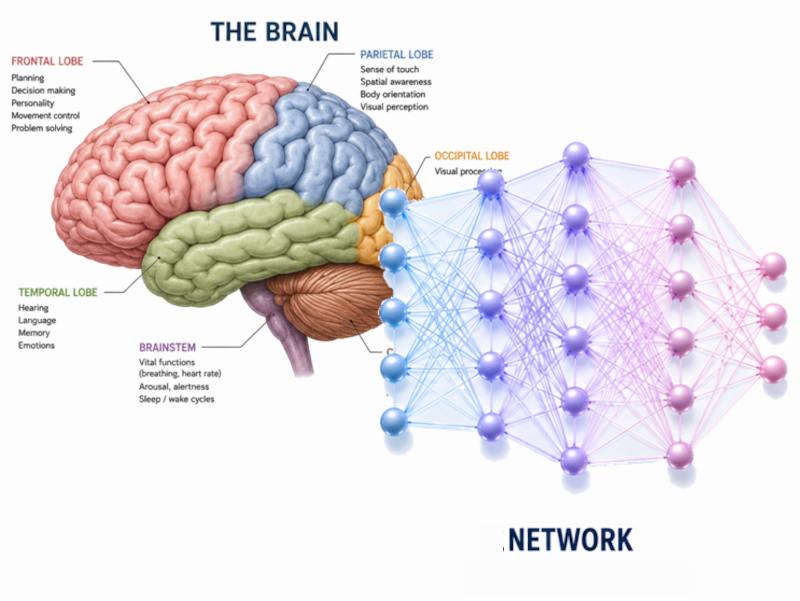
This difference is precisely the source of its enormous potential. While the human brain is optimized to function in a biological environment with limited resources, an artificial intelligence system can have practically unlimited memory, process enormous volumes of information in parallel and explore millions of alternatives in a few seconds. Innovation, once again, does not arise from copying nature, but from understanding its fundamental principles and using them as a starting point to build solutions capable of vastly exceeding the performance of the original system.
ID:('gp', 532)
The system key
Storyboard
The key to modern artificial intelligence systems is that they do not work directly with words or concepts, but with high-dimensional numerical representations. The first step is to decompose any text into small units called tokens, a process known as tokenization. Each token is subsequently transformed into a numerical vector of hundreds or thousands of dimensions that captures its relationships with the rest of the knowledge learned by the system. These vectors make up a huge structural space called Attention Map, where the relationships between the different elements are represented by proximities and connection patterns.
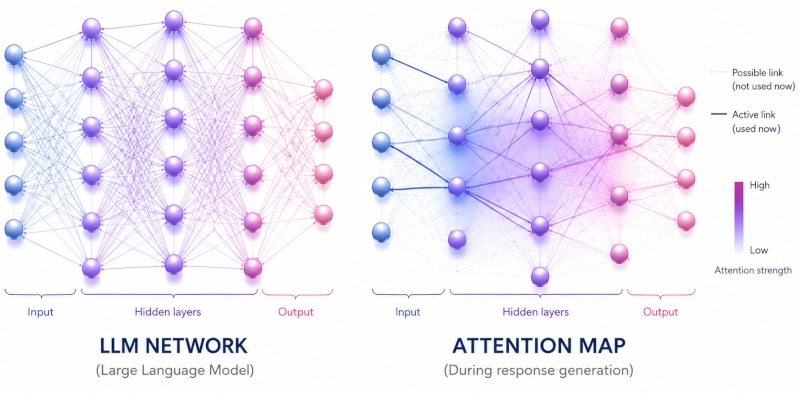
Each time we perform a query, the system converts the question into a set of vectors, identifies the closest regions within this structural space and begins to traverse the most consistent connections between them. As it moves through this network, it builds new vectors that are finally transformed back into words through the inverse process of tokenization, generating the response that we observe.
The difference with human reasoning is profound. We think mainly through concepts organized in semantic, logical and structural networks that we have built throughout our lives. In contrast, artificial intelligence never "sees" concepts as such. For her, there are only vectors, relationships and patterns of similarity within a mathematical space of enormous dimensionality. What for us represents the concept of tree, energy or democracy, for AI corresponds simply to a highly connected region within this structural space.
This form of representation is extraordinarily efficient for detecting relationships between enormous amounts of information. Thanks to its immense memory and processing capacity, artificial intelligence can simultaneously explore millions of possible connections and find patterns that would be practically impossible for a person to discover. Their way of "thinking" is therefore very different from ours: they do not try to understand the meaning of concepts, but rather navigate an immense space of structural relationships where answers emerge from the similarity and organization of data. This difference is precisely what allows it, in many tasks, to act as an extraordinary amplifier of our intellectual capacities.
ID:('gp', 533)
10 years of evolution
Storyboard
The evolution of land transportation required more than a thousand years to reach its current state. Aviation followed a similar path in about a century. In contrast, the artificial intelligence revolution is happening in just a decade. This acceleration raises an inevitable question: will the next great technological revolution occur in just one year?
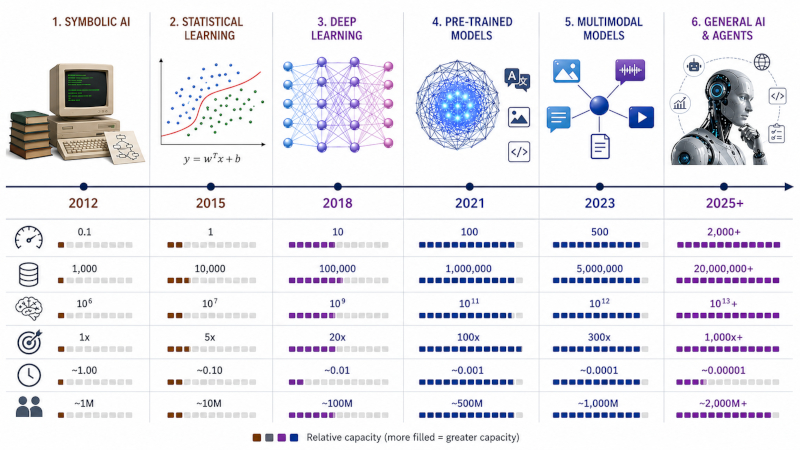
Even more surprising than its speed is the magnitude of the change. Most indicators associated with artificial intelligence evolve so rapidly that they must be represented on a logarithmic scale to be displayed on the same graph. During this short period, processing power has increased by approximately 20,000 times, available memory has grown by several orders of magnitude, and the number of model parametersa rough indicator of their ability to represent complex relationshipshas increased by approximately 10 million times. At the same time, computational efficiency has improved around a thousand times, while the cost per unit of capacity has been reduced to a fraction close to one hundred thousandth of its initial value.
The consequence of this evolution has been extraordinarily rapid adoption. In a few years, artificial intelligence systems went from being experimental tools used by small research groups to becoming platforms used by billions of people by a growing number of companies, research centers and digital services around the world.
ID:('gp', 534)
Tendencies
Storyboard
If the main indicators associated with the evolution of artificial intelligence are analyzed, it is observed that the majority must be represented on a logarithmic scale. The increases are so large that a linear representation would hide practically all the evolution that has occurred in recent years.
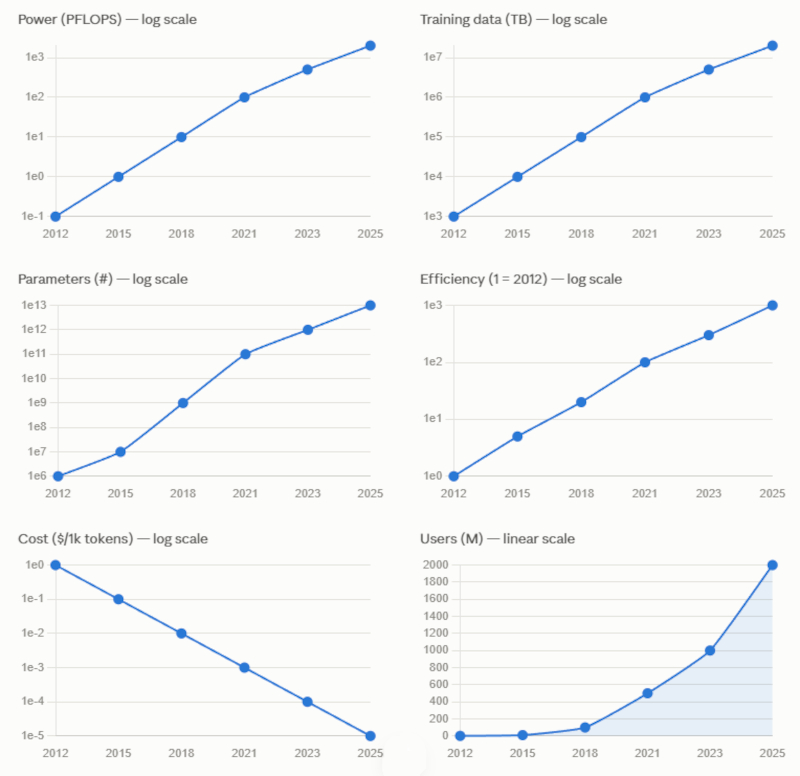
The figures shown should be interpreted as orders of magnitude rather than exact values. The data published varies between companies, both because they use different metrics and because, in recent years, many of them have stopped disclosing detailed information due to the intense competition in the sector. However, these differences do not modify the main conclusion: all indicators show extraordinary growth, in many cases of several orders of magnitude in just a decade.
We are, therefore, facing one of the fastest technological transformations in history. Its impact is not limited to the scientific or computing field, but is driving profound changes in the economy, education, industry and, in general, in the way in which society produces, accesses and uses knowledge.
ID:('gp', 535)
The revolution within the revolution
Storyboard
A common phenomenon is observed in the two innovations analyzed above. For long periods there are gradual improvements, but at a certain moment an innovation appears that modifies one of the fundamental components of the system and produces a much greater leap than all the previously accumulated improvements. In land transport this change occurred with the incorporation of the engine, which definitively replaced animal traction. In aviation it happened with the transition from the propeller to the turbine, allowing speeds that were previously unattainable to be reached.
It is reasonable to think that artificial intelligence will undergo a similar process. Current systems continue to rapidly increase their processing capacity, memory, and efficiency, but there is still no consensus that they have generally surpassed humans in the end result of complex reasoning, creativity, or research tasks. It is possible that at some point a new operating principle will appear that produces a qualitative change, initiating a new generation of systems with capabilities far superior to the current ones.
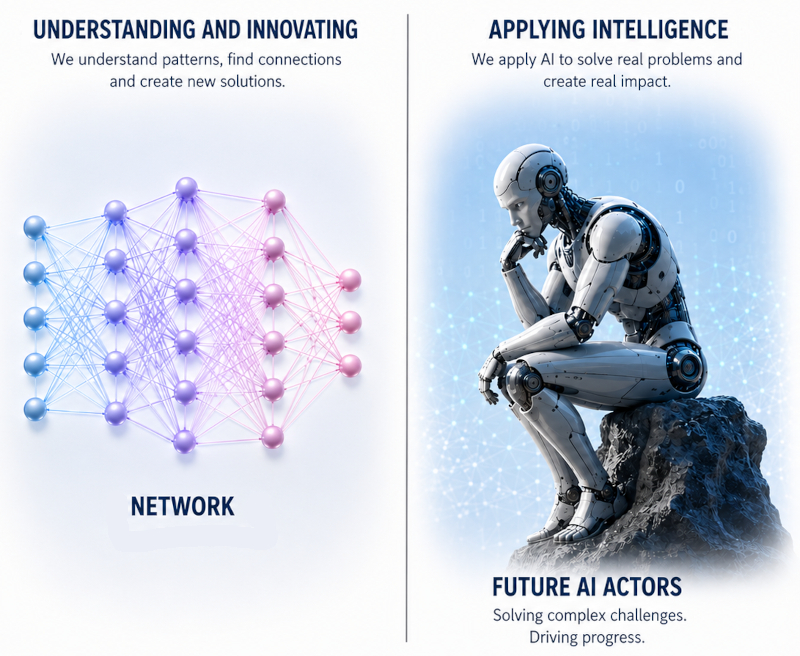
A first leap of enormous impact will probably not come only from models that "think" better, but from the integration of that intelligence with a body capable of interacting with the physical world. Humanoid robots are currently being developed that combine artificial intelligence models with vision, manipulation, locomotion and action planning. These systems will not only be able to reason faster than a person in many tasks, but also perform an important part of the manual work that humans do today.
The incorporation of these systems, known as physical agents or autonomous humanoid robots, could represent a change for artificial intelligence as profound as the engine for land transportation or the turbine for aviation. At that moment we would stop talking only about programs capable of answering questions and move on to systems that perceive, reason, decide and act autonomously on the real world.
ID:('gp', 536)
Palos Verdes, Costa de Corral, Región de los Rios, Chile