
 User:
User:



Ohm's Law
Storyboard 
If a field is applied to a load, a force is obtained. Such force applied along a path leads to potential energy. If it is expressed with an electric field, the potential energy per charge that we call electrical potential is obtained. The electric potential generates displacement of charges which implies that there is a flow that we call electric current. Its magnitude depends on the electrical potential and the resistance that the material in which the electrons that we will call the conductor are. The resulting law is the so-called Ohm's law.
ID:(815, 0)


Ohm's Law
Description
When a field is applied to a charge, it generates a force. This force, when acting along a path, gives rise to potential energy. If this potential energy is expressed in terms of an electric field, it becomes the potential energy per unit charge, known as electric potential. The electric potential induces the movement of charges, creating a flow called electric current. The magnitude of this current depends on both the applied electric potential and the resistance of the material through which the charges move, commonly referred to as the conductor. The resulting relationship between electric potential, current, and resistance is described by the well-known Ohm's law.

Variables

Calculations
 to
to  ,
then, select the variable:
,
then, select the variable:  to
to 
Calculations
Variable
 Given
Calculate
Given
Calculate
 Target :
Equation
To be used
Target :
Equation
To be used

Equations
None
(ID 3214)
None
(ID 3843)
(ID 10400)
None
(ID 10401)
(ID 16236)

Examples
(ID 16003)
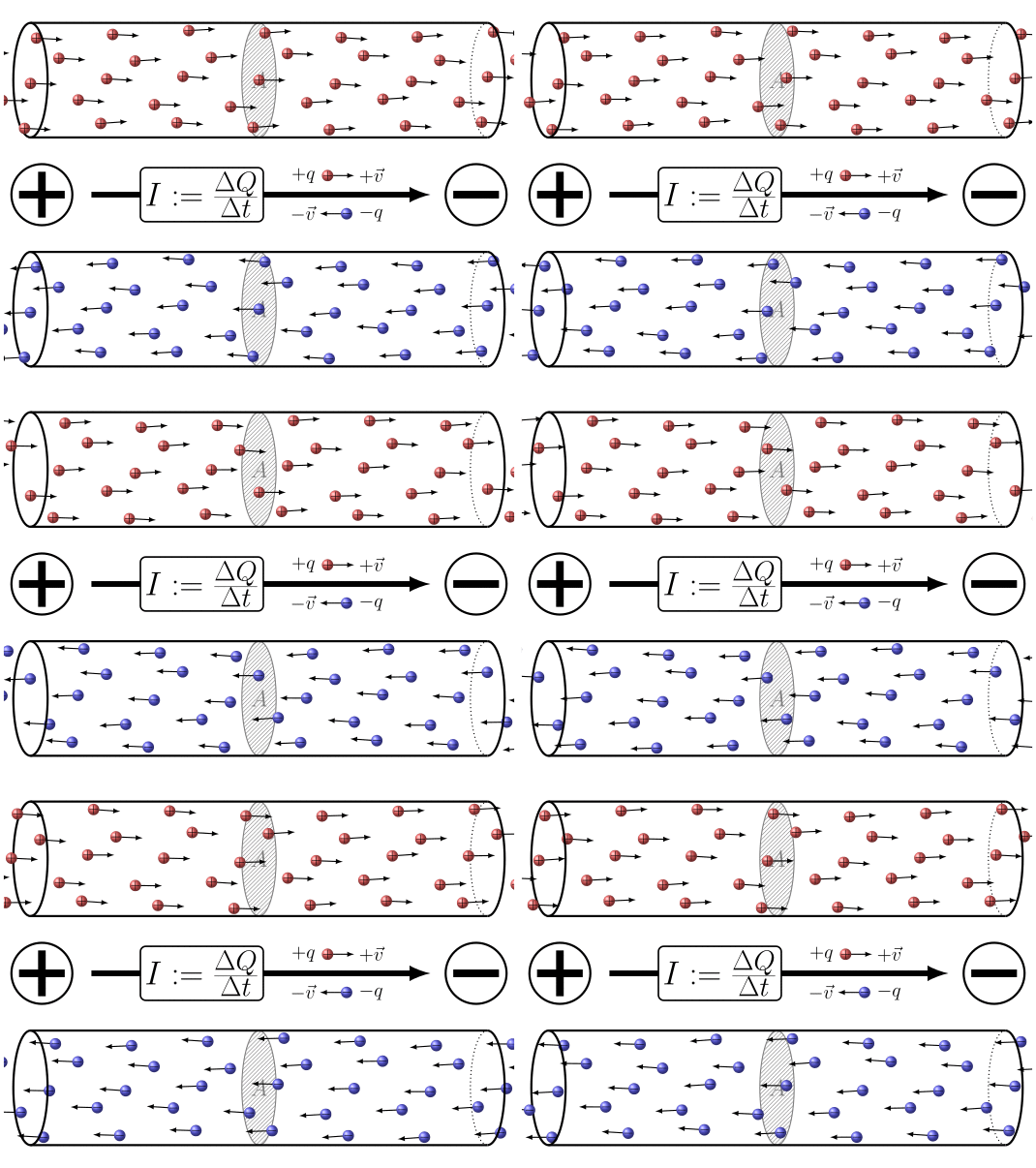
In summary, the application of a potential difference between the two ends of the
(ID 7860)
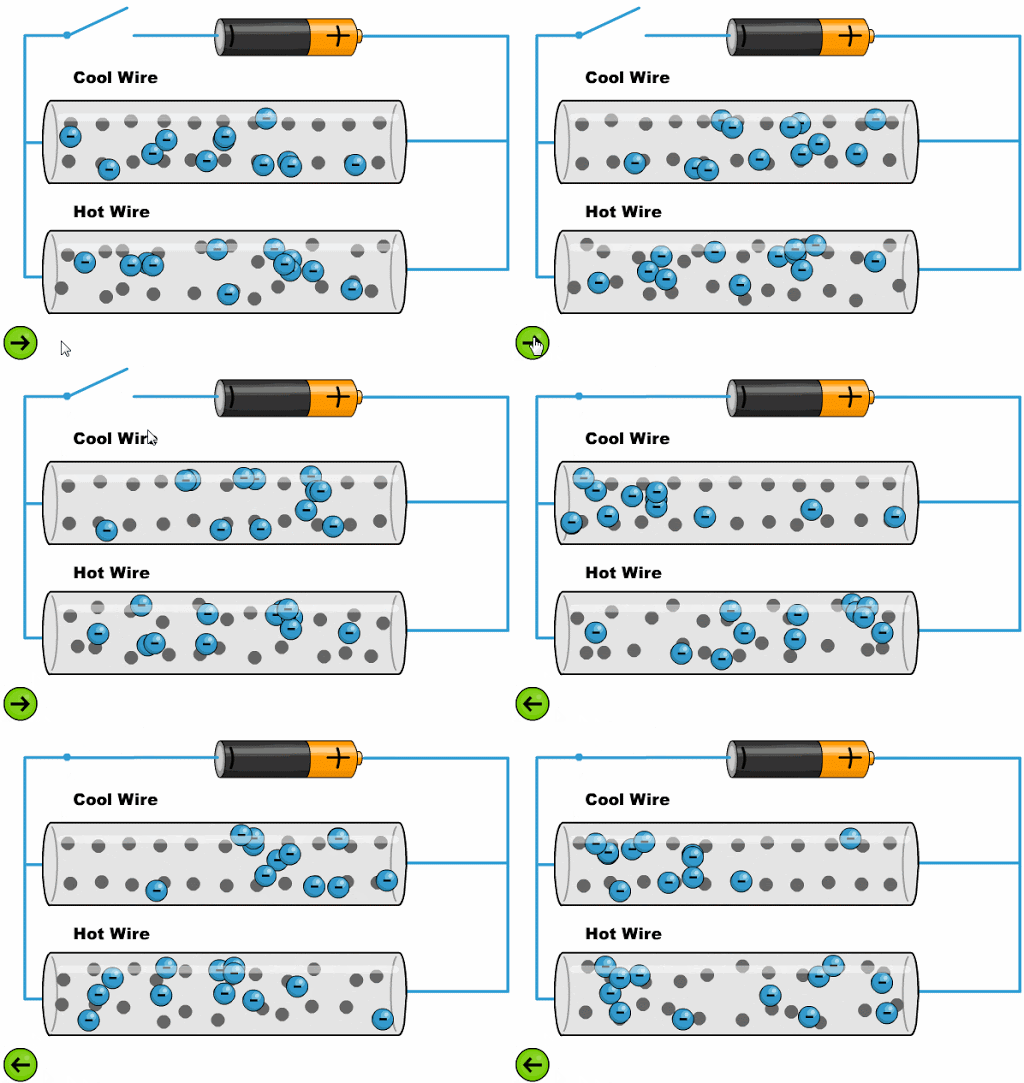
The heat makes the atoms oscillate with a greater amplitude, making it difficult for the electrons to advance:
(ID 11761)
(ID 16002)
ID:(815, 0)