
 User:
User:



Heat and Temperature
Storyboard 
Heat corresponds to the energy possessed by the atoms in a body, which can be interpreted as the oscillation they perform around their equilibrium point.
A measure of this energy is the body's temperature. If heat is supplied to a body, its temperature increases proportionally. The proportionality constant, which we call heat capacity, is in itself a function of the temperature.
ID:(780, 0)

Microscopic heat
Image
Heat is nothing more than energy at a microscopic level.

In the case of a gas, it corresponds primarily to the kinetic energy of its molecules.
In liquids and solids, we must take into account the attraction between atoms, which is where potential energy comes into play. Therefore, in these cases, heat corresponds to the energy that particles have and with which they oscillate around the equilibrium point defined by the surrounding particles.
ID:(118, 0)

Heat
Note
Heat is associated with elements like fire, which causes the temperature of water to rise. The process of heating generates movement, indicating that heat is related to mechanical energy. Even the handle of a pot gets heated, and our bodies are capable of perceiving that temperature. Moreover, fire emits radiation that heats up objects that are exposed to it.

From this, we can infer that by transferring heat, we can raise the temperature of an object, and that the generation of movement is associated with energy.
ID:(585, 0)

Temperature
Quote
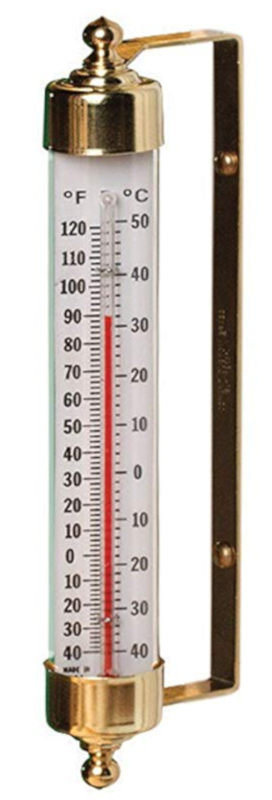
Temperature is a measure of the energy contained within an object and is associated with the oscillations of molecules/atoms in solids and liquids, and with the movement of these particles in gases and liquids.
ID:(11118, 0)

Heat and Temperature
Description
Heat corresponds to the energy possessed by the atoms in a body, which can be interpreted as the oscillation they perform around their equilibrium point. A measure of this energy is the body's temperature. If heat is supplied to a body, its temperature increases proportionally. The proportionality constant, which we call heat capacity, is in itself a function of the temperature.

Variables

Calculations
 to
to  ,
then, select the variable:
,
then, select the variable:  to
to 
Calculations
Variable
 Given
Calculate
Given
Calculate
 Target :
Equation
To be used
Target :
Equation
To be used

Equations

Examples
ID:(780, 0)